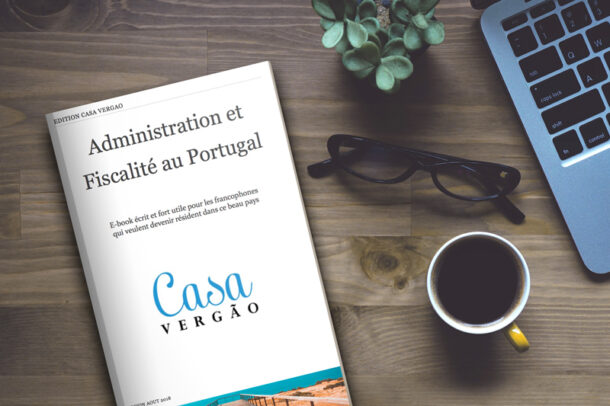
Buying a property in Portugal is a relatively simple process. However, the destination is now extremely popular with the French. Prices are skyrocketing in Lisbon and the Algarve and the rest of the country should also follow this trend but to a lesser extent. There is still time to get a good deal.
 The role of the notary and the lawyer
In Portugal, at the time of the promise to sell, the notary only authenticates the signatures and the financial settlement between the seller and the buyer. He only intervenes at the end for the final contract.
It is therefore advisable to gather all the information with a lawyer (or your bank in the case of a credit application) from the property register and the town hall. He or she should also make sure that the taxes and condominium fees are up to date.
If you are buying from a private individual
Go to the Town Hall, “Câmara Municipal”, of the place where the property is located, and ask for the building and housing permits, “Licenças de Construção e de Habitação do imóvel”. You will then obtain the document that proves that the property was built legally: “o Alvará da Licença de Utilização”. Properties built before 1951 are exempt from this requirement.
To check that the property is not mortgaged, pledged or rented, that the seller is the owner of the property, you can go to the Tax Centre, “Finanças”, located in the municipality or district of the property.
There may also be a technical sheet (ficha técnica de habita- çao) which lists the technical and functional characteristics of the building. All dwellings that were completed after 30 March 2004 must have a FicheTechnique, which gives technical details about the construction, insulation, materials, suppliers, etc. This document is provided by the seller. This document is provided by the seller. An energy certificate is also required and given to the buyer.
If you use an estate agent
When dealing with an estate agent, you will of course ask your estate agent for the above-mentioned documents. It is not uncommon to find an agent who is bilingual in French and Portuguese. The estate agent must have an AMI Number “Associação de Mediacão Imobiliária” (The Association of Real Estate in Portugal), issued by the Institute of Construction and Real Estate – the INCI.

If you are applying for a bank loan
In this case the bank will check the documents before taking a mortgage, this is very reassuring and correct.
- The two main documents are
the certificate of registration of ownership at the land registry (codigo de acesso à certidao do registro predial) with the description of the property and its registration in the name of the seller. This document is an extract from the urban planning register (Conservatória). It indicates, among other things, the identity of the property and whether the property is subject to an outstanding mortgage. There is a description of the registered data of the property (building and land area, type, location, boundaries), which should correspond to the actual ownership. - The property tax identification document (Cadernata Pre- dial) cadastral document. A property registration document that specifies the location of the property, location, area, composition, owner. The financial registration of the institution, which has to be reconciled with the details in the land register, also gives information about the property value (taxable value). This document is obtained from the tax authorities (Finanças).
 Property purchase process
 Property purchase process
You have found your property. You will need to sign a “Contrato de Promessa de Compra e Venda” contract of compromise sale. This is the legal document that sets out the conditions of the sale. This contract is a private document, and it is recommended that the signatures are acknowledged by a notary.
Between 10 and 12% of the deposit must be paid by the buyer directly to the seller. If you retract after signing the deed you will lose the amount. But if the seller decides to withdraw after the contract has been signed, he will have to pay double the deposit.
Every buyer must obtain a “no-taxpayer” tax ID. If you do not have an address in Portugal, you will be asked to have a tax representative (lawyer, accountant or someone you know).
A date will be set for the signing of the sales contract, called “Escritura de Compra e Venda”. This is usually 3 to 4 weeks after the compromis de vente. This is the deed of sale that is done before a notary.
Before the deed of sale, you will have to pay a municipal tax called IMT (Imposto municipal sobre Trans- missões) and the ÍS (Imposto de Selo). This tax is payable at the tax office closest to your property. Real estate transactions in Portugal are not subject to VAT.
The final deed of sale “a Escritura de compra e de venda” is done by a notary. The notary ensures that the transaction is legal. Once you have bought the property, the notary will register you as the owner in the national register.
Taxes when you buy your property
Agency fees are paid by the seller. The following costs will be incurred:
- Legal fees: between 1.5 and 2% of the purchase price
- Notary and registration fees: between 1.5 and 3% of the purchase price
- Stamp duty (imposto de selo): 0.8% of the purchase price plus 0.6% of the mortgage amount if applicable.
- IMT (Imposto Municipal sobre Transaçãoes onerosas de imoveis): this is the municipal tax you have to pay when you buy a property
- MI (Imposto Municipal sobre Imoveis): property tax. It is calculated on the Tributary Property Value (VPT), which is less than the purchase price. 0.8% for rural properties and 0.3 to 0.5% for urban properties.
You can benefit from the IMI exemption for 3 years by applying to Finanças
For the purchase of a second home
The RNH status means that you have to settle completely in Portugal. It is, of course, not forbidden to keep one or more secondary residences in France. However, don’t forget to do the right thing, by declaring your residence in Portugal, otherwise the French government could requalify your expatriation by proving that your tax home is still in France.
Find out more about real estate in Portugal.